What counts as fever
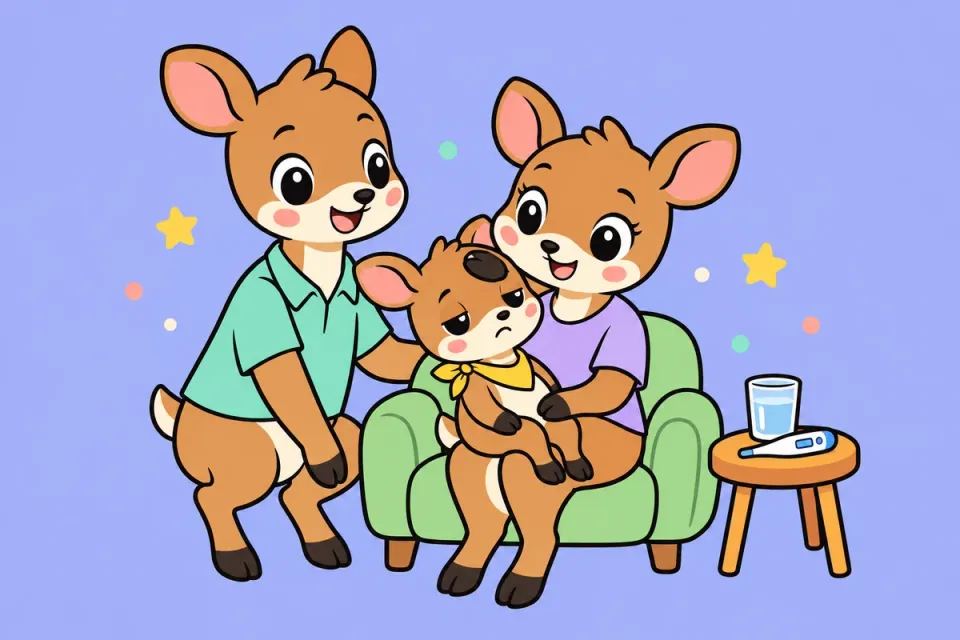
A body temperature of 38.0 °C or higher measured rectally or in the ear (37.5 °C under the arm) counts as fever. Fever is the body’s way of fighting infection; the height of the number does not track the severity of illness. A child at 39.5 °C who still drinks and plays is often safer than one at 38.2 °C who is limp and refuses feeds.
The age rule
- Under 3 months: any fever ≥ 38 °C must be seen by a doctor immediately, even if the baby seems fine. The immune system cannot yet contain infections.
- 3 to 6 months: same-day check if the temperature is ≥ 39 °C or the baby seems unwell.
- Over 6 months: watch behaviour; see a doctor if fever lasts more than 3 days or any warning sign appears.
Warning signs, at any age
Go to emergency care for: a seizure; difficulty waking or extreme floppiness; fast or laboured breathing, chest indrawing; blue lips or skin; a purple-red rash that does not fade under a pressed glass; a bulging fontanelle; no urine for over 8 hours; persistent vomiting; or an unusual high-pitched cry.
What you can do at home
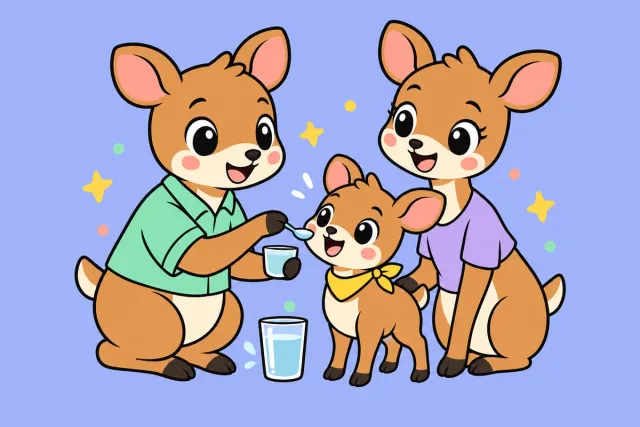
- Offer fluids more often: breast milk, formula, or oral rehydration solution for older children.
- Light clothing, a cool room. A lukewarm compress in the armpits and groin if the child is uncomfortable, never cold water or alcohol.
- Paracetamol 10 to 15 mg per kg of body weight every 4 to 6 hours if the child is uncomfortable, at most 5 doses a day. Ibuprofen only over 6 months and after food. Never aspirin.
Log temperature and medication in Catat → Kesehatan → Medis. Neatly recorded dose times prevent double dosing when caregivers swap night shifts, and the temperature curve helps the doctor.
This article is general education and does not replace a doctor’s examination. When in doubt, consult a paediatrician.